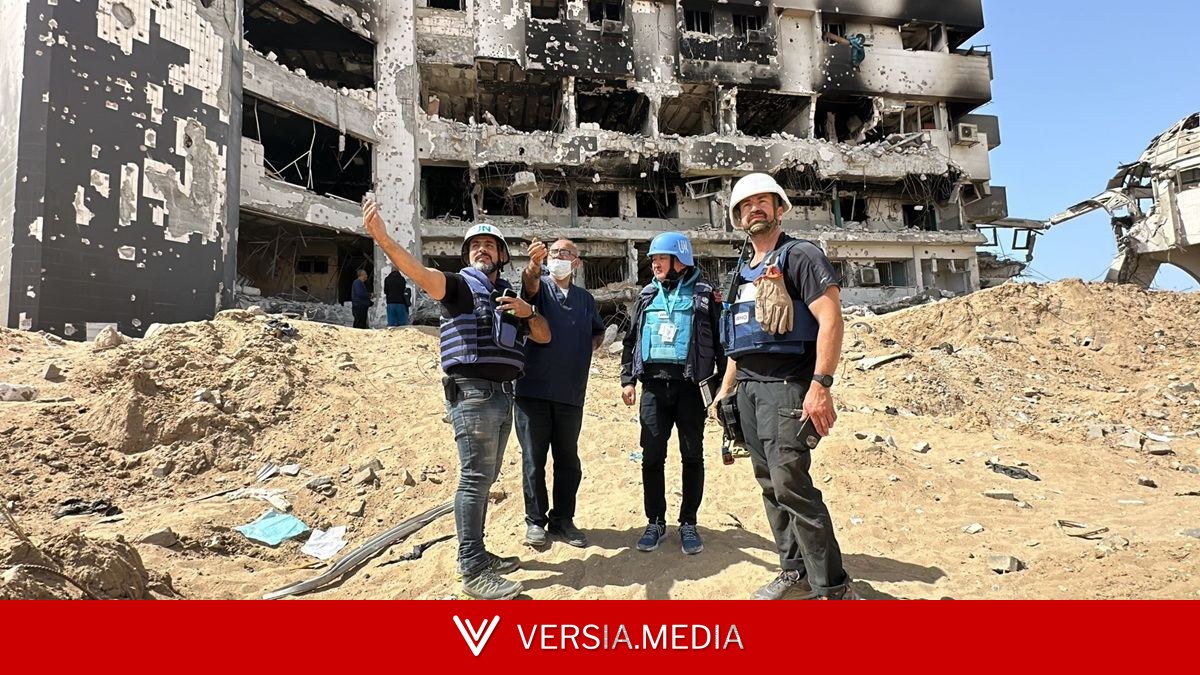
Ten years ago, the UN Security Council unanimously passed Resolution 2286, addressing health care during armed conflicts. The situation has deteriorated compared to a decade ago. Today, we commemorate not an achievement—we acknowledge a failure.
As violence targeting medical facilities, transport, and personnel persists without interruption, the harm this resolution aimed to prevent has not lessened. It has persisted and, in numerous situations, grown worse. As the leaders of the International Committee of the Red Cross (ICRC), the World Health Organization (WHO), and Médecins Sans Frontières (MSF), we unite with others in the global community to issue an urgent plea for action.
Every day on the frontlines of the world’s most severe crises, our teams observe the devastating outcomes when the inviolability of health care is compromised. Hospitals are turned to rubble, ambulances encounter delays and obstruction, and doctors, nurses, and patients are all too frequently caught in assaults that lead to death and injury. Patients die from wounds that are otherwise treatable, women are sometimes compelled to deliver babies without proper care, and entire populations lose access to life-saving services. When health care is no longer secure, it is frequently the most obvious indicator that the standards and norms intended to curb the devastation of war are collapsing. When hospitals and those providing care are attacked, we encounter not only a humanitarian emergency but a crisis of humanity.
States and all parties to armed conflict must adhere to the regulations safeguarding health care. The duty under international humanitarian law (IHL) to “respect and ensure respect...in all circumstances” requires states not only to follow these rules themselves but also to leverage every possible influence to ensure that other states and parties to conflict do the same.
The recommendations from the UN Secretary-General that accompanied Resolution 2286 continue to offer a clear, practical plan for states. The ICRC, WHO, and MSF are prepared, with our presence in conflict zones, medical knowledge, and operational capabilities, to assist states in implementing these vital measures.
We also recall World Health Assembly Resolution 65.20, adopted in 2012, which established systematic documentation and reporting of attacks on health care by WHO. Enhancing consistent and transparent reporting is crucial for building the evidence base, guiding prevention and response, and supporting accountability.
To uphold and advance Resolution 2286’s demand “that all parties to armed conflicts fully comply with their obligations under international law... to ensure the respect and protection of all medical personnel and humanitarian personnel exclusively engaged in medical duties, their means of transport and equipment, as well as hospitals and other medical facilities”; and to avert another decade of eroding norms and unjustifiable violence affecting health care in conflict settings, we urge all states to promptly implement the following measures:
convert existing commitments into concrete actions to execute Resolution 2286 and actively promote positive efforts, including the results of the Global IHL initiative’s workstream on achieving meaningful protection for hospitals;
embed the protection of health care into armed and security forces’ doctrine, rules of engagement, and operational guidance to give practical effect to IHL obligations;
review, enact, and strengthen domestic laws to safeguard health care in armed conflict;
allocate sufficient financial, technical, and operational resources to implement measures that protect health care and foster respect for its provision;
use all available means to influence other parties to conflict—including those that states support in any form—to comply with their obligations to protect health care;
conduct prompt, transparent, and impartial investigations into attacks on health care and support efforts to ensure accountability in line with applicable legal frameworks; and
regularly and transparently report on the implementation of Resolution 2286, including progress, challenges, good practices, and lessons learned to support its full implementation.
Ten years ago, the international community reaffirmed that the laws of war must be upheld and that the wounded and sick, as well as those who care for them, must be protected. Today, health facilities continue to be damaged or destroyed. Medical workers and patients are still being caught in attacks that result in death and injury. That is not a failure of the law. It is a failure of political will.
We urge world leaders to act and demonstrate the necessary political leadership to end this violence. Health care must never be a casualty of war.