To the People of Tenerife
Warm regards from Geneva. It is Tedros once more.
Our mission in Tenerife has concluded. And it was carried out with dignity.
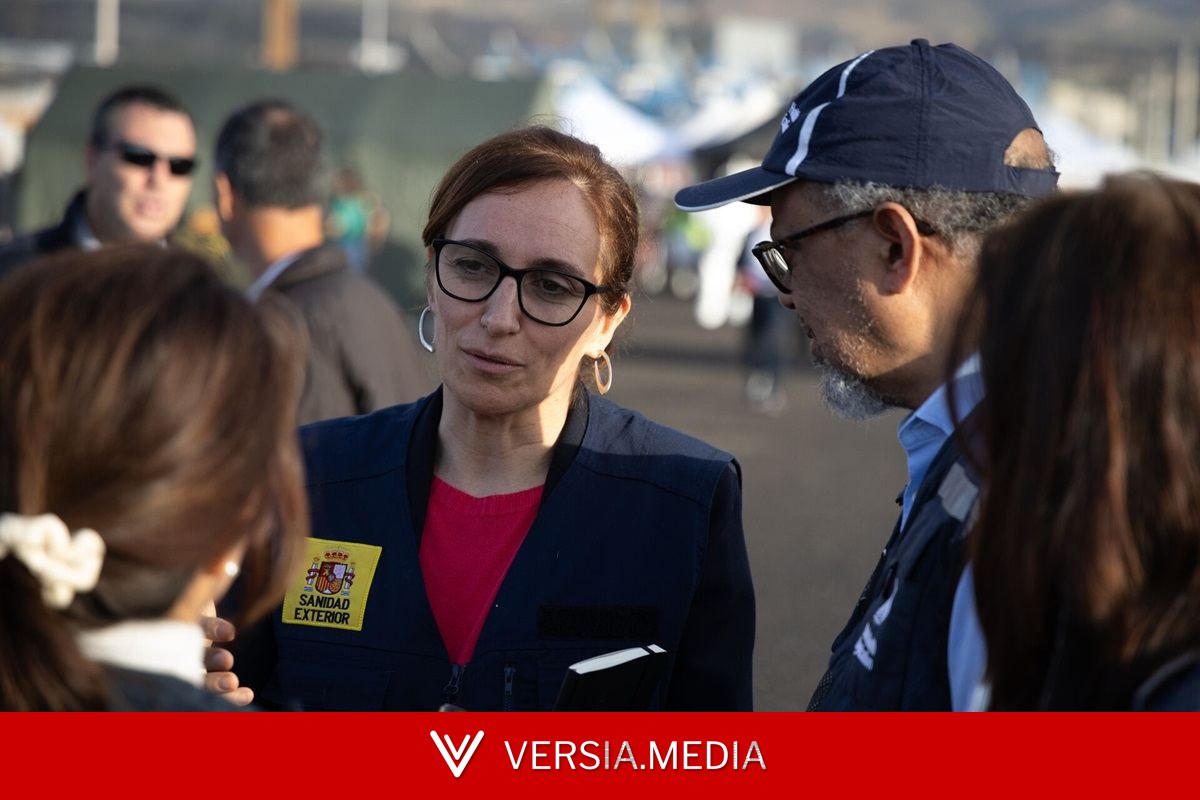
Last Monday, I stood at the Granadilla de Abona port and observed the final passengers from the MV Hondius boarding the vehicles that would take them to their destinations. I watched healthcare workers in protective gear moving with calm expertise. I observed Spanish officials coordinating with precise efficiency. And I witnessed and felt your backing and unity.
I reflected on the message I sent to you only a few days earlier, and how every commitment made by your Spanish Government and the World Health Organization was fulfilled, exactly as outlined.
More than 120 individuals from 23 nations have safely left the vessel and are now receiving care and oversight from public health experts either during transit or after arriving in their home countries. They came in fear and doubt. They departed carrying something they could never have anticipated discovering in Tenerife: the respect of being looked after by strangers from your community, and people across the globe, who elected to assist. The risk evaluation held firm. The procedures functioned effectively. The safe passage remained intact. Science and solidarity worked in tandem, as they must, as they can, when we place trust in one another.
Yet I do not wish for this moment to be recalled solely as a logistical achievement. What occurred here in Tenerife was something more uncommon than efficiency. It was ethical bravery, the readiness of an entire island, an entire nation, to declare: these are human beings, and we will not abandon them.
The administration of Prime Minister Sánchez fulfilled its duties under international law and then exceeded them, with kindness, swiftness, and compassion. Ministers Mónica García, Fernando Grande-Marlaska, and Ángel Víctor Torres led with notable dedication. The port authorities of Granadilla carried out a complicated operation flawlessly. The medical teams who boarded that ship, who stood at the port entrances, who traveled in those vehicles: they performed their duties not because it was simple, but because it was proper.
To Captain Jan Dobrogowski and his 26 crew members still aboard the MV Hondius, now sailing toward the Netherlands: you kept your passengers united through weeks of sorrow and confinement. History will not overlook that.
To you, the residents of Tenerife, who welcomed your island not with cheers or fanfare but with quiet, steady acceptance: I want you to understand what that signifies to the world. You may never meet the passengers and crew who passed through your port. But those 150 individuals and their families know that somewhere in the Atlantic, there was an island community that answered “yes.” That community was you.
We exist in an era when it is simple to shut doors, to withdraw inward, to allow fear to turn into hostility. Tenerife opted differently. You have inscribed something into the narrative of how humanity responds to emergencies, and the WHO will carry that narrative forward.
Three individuals died in connection with the outbreak on the Hondius. Their families are mourning. The resolution of this operation does not erase that sorrow, and I do not wish it to. Behind every public health reaction are actual lives, actual losses, and actual families who will bear this forever.
We also learned of the passing of a member of the Guardia Civil of Tenerife, who succumbed to a heart attack while serving during this operation. He was present because of duty and dedication to his community. I offer my deepest sympathies to his family, his colleagues, and to the entire Guardia Civil. His service will not be forgotten.
The most effective protection we possess is solidarity. Tenerife has demonstrated this, not as a motto, but as a method of working and living.
I will admit something personal. Last Monday, before the final group of passengers departed, I walked through part of your city, alone. The island was continuing its daily life, and I found Tenerife to be genuinely beautiful: the landscape, certainly, but above all the people. The kindness I received from some individuals who recognized me, even in the briefest interactions, remained with me.
I wish I had arrived under different circumstances, for a WHO conference perhaps, or even better, simply with my family to relax. That is a wish I plan to fulfill. I look forward to returning to Tenerife as a visitor, not as an emergency responder, to experience it as it deserves to be seen, slowly and without haste, with my family by my side.
On behalf of the World Health Organization, on behalf of the passengers now back home, and on behalf of those families around the globe who watched this island with hope: thank you. From the depths of my heart, thank you.
I also wish to thank my colleagues from WHO headquarters and from our Regional Office for Europe in Copenhagen, who stood with me in Tenerife, and those who supported us tirelessly from a distance. This was a team effort in every sense of the term.
But for us, the work is not yet complete, until every passenger and crew member is out of quarantine and reunited with their loved ones.
With profound respect, admiration, and gratitude,
Tedros
Editor's note
The statement has been revised to reflect that the three individuals confirmed to have died as a result of the hantavirus outbreak did not all perish on the ship. Only two individuals died onboard, while the third died upon arrival in South Africa.