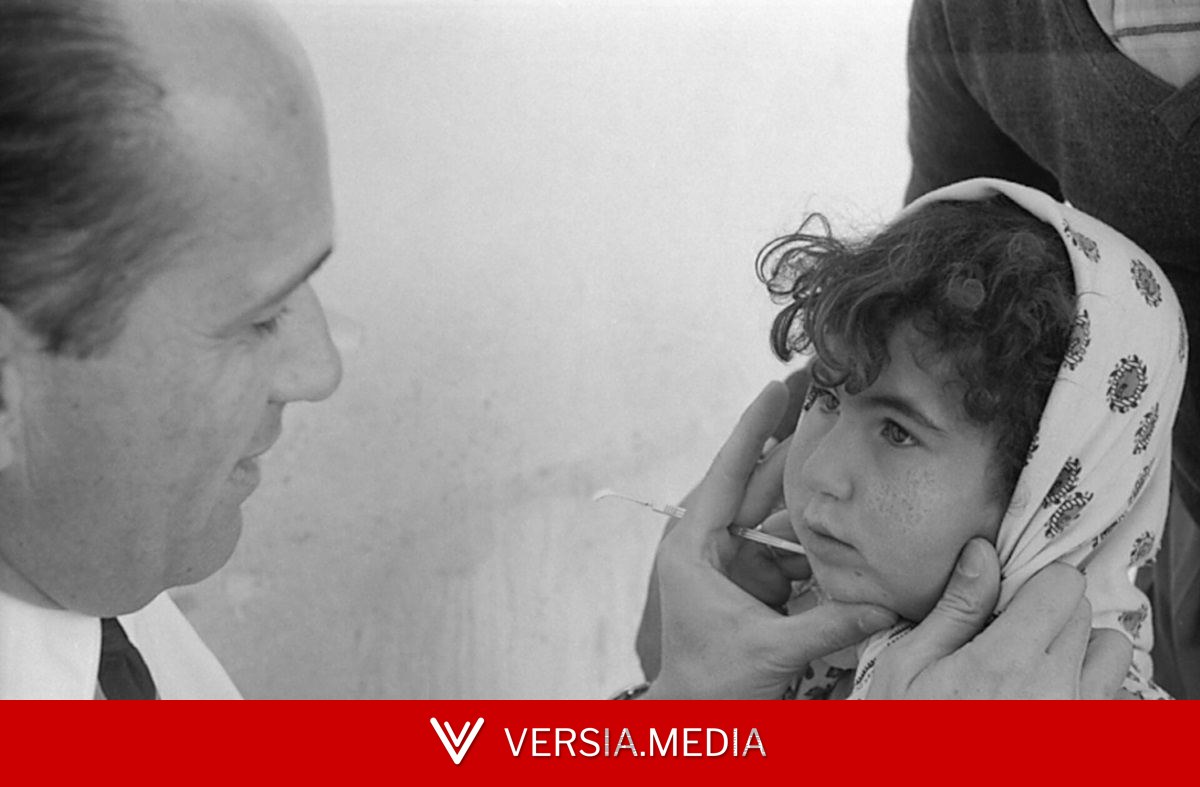
The World Health Organization (WHO) has confirmed that Tunisia has eliminated trachoma as a public health concern. This represents a significant achievement in the nation’s public health history, following decades of persistent national initiatives.
“I extend my congratulations to Tunisia for this historic public health milestone,” stated Dr Tedros Adhanom Ghebreyesus, WHO Director-General. “Eliminating trachoma demonstrates what can be accomplished with enduring political dedication, robust primary healthcare, and collaborative efforts. Tunisia has shown that even the world’s primary infectious cause of blindness can be conquered.”
Trachoma is strongly associated with restricted access to water, sanitation, and hygiene, and disproportionately affects vulnerable groups. During the early to mid-20th century, trachoma was widespread in Tunisia, impacting at least half the population, particularly in the southern areas.
“I commend Tunisia on the elimination of trachoma as a public health issue. This is a remarkable accomplishment that mirrors sustained and unwavering national commitment over many years and illustrates what is achievable when a country stays focused on tackling preventable causes of blindness,” remarked Dr Hanan Balkhy, WHO Regional Director for the Eastern Mediterranean.
For decades, Tunisia implemented a thorough and ongoing response to trachoma, transforming a once-significant health burden into a success narrative. The country adopted and expanded the WHO-recommended SAFE strategy: Surgery for advanced cases, Antibiotics to eliminate infection, Facial cleanliness to curb transmission, and Environmental improvement, especially enhanced access to water and sanitation. Tunisia also conducted nationwide screening and treatment initiatives, incorporated eye care into primary care and school health programs, and collaborated with communities to encourage proper hygiene.
“Validation signifies a historic achievement for Tunisia and reflects our nation’s long-term dedication to public health, prevention, and fairness,” said Dr Mustapha Ferjani, Minister of Health of Tunisia. “This milestone results from decades of coordinated national efforts, with the commitment of generations of healthcare professionals and local communities who worked tirelessly to broaden access to care, strengthen prevention, and improve eye health throughout the country. Tunisia stays committed to maintaining these achievements and safeguarding future generations.”
Tunisia’s success followed an extensive campaign led by the Ministry of Health, supported by WHO and partners, rooted in robust public health policies and social development. Strong health system foundations, including broad access to primary healthcare and notable advancements in water and sanitation coverage, helped lower transmission and reduce disease prevalence.
A comprehensive post-validation surveillance system is now in place to detect any resurgence of the disease at an early stage. This system includes provisions for ongoing case management and training of healthcare professionals.
“The validation of eliminating trachoma as a public health problem in Tunisia reflects the impact of sustained collaboration between the Ministry of Health and WHO in achieving public health gains across the country,” said Dr Ahmed Zouiten, Acting WHO Representative in Tunisia. “This milestone stands as a powerful demonstration of how science, evidence-based programming, and coordinated technical support can overcome neglected tropical diseases every time and everywhere.”
Tunisia joins a growing number of countries working toward the elimination of neglected tropical diseases, a key element of the health-related Sustainable Development Goals.
Editor’s notes
Neglected tropical diseases and trachoma elimination efforts
Trachoma is caused by the bacterium Chlamydia trachomatis and spreads through close contact with infected individuals, contaminated surfaces, and flies that carry eye and nose discharge. Repeated infections can lead to scarring of the eyelids, turning eyelashes inward, and ultimately causing blindness if untreated.
Neglected tropical diseases like trachoma are associated with devastating health, social, and economic consequences. Their burden is primarily felt among impoverished communities in tropical areas.
Public health targets for the control, elimination, and eradication of these conditions were set in the road map for neglected tropical diseases 2021–2030.
In 1996, WHO launched the WHO Alliance for the Global Elimination of Trachoma by 2020 (GET2020), creating a network of governments, nongovernmental organizations, and academic institutions dedicated to the fight against trachoma. WHO continues to support endemic countries in accelerating progress toward the global target of eliminating trachoma as a public health problem worldwide; 2030 is the new target date.
Elimination of trachoma as a public health problem is defined as: (i) a prevalence of trachomatous trichiasis (TT) “unknown to the health system” of < 0.2% in ≥15-year-olds; and (ii) a prevalence of trachomatous inflammation-follicular (TF) in children aged 1–9 years of < 5%, in each formerly endemic district; plus (iii) the existence of a system to identify and manage incident cases of TT.
Other countries validated by WHO as having eliminated trachoma as a public health problem are: Algeria, Australia, Benin, Burundi, Cambodia, China, Egypt, Fiji, Gambia, Ghana, India, Iraq, Islamic Republic of Iran, Lao People’s Democratic Republic, Libya, Malawi, Mali, Mauritania, Mexico, Morocco, Myanmar, Nepal, Oman, Pakistan, Papua New Guinea, Saudi Arabia, Senegal, Togo, Vanuatu, and Viet Nam.
Trachoma is the first neglected tropical disease to be eliminated in Tunisia. Following recognition of national trachoma elimination there, Tunisia becomes the 14th country in the WHO Eastern Mediterranean Region to have eliminated at least one neglected tropical disease. It is the 31st country in the world to be validated as having eliminated trachoma as a public health problem.