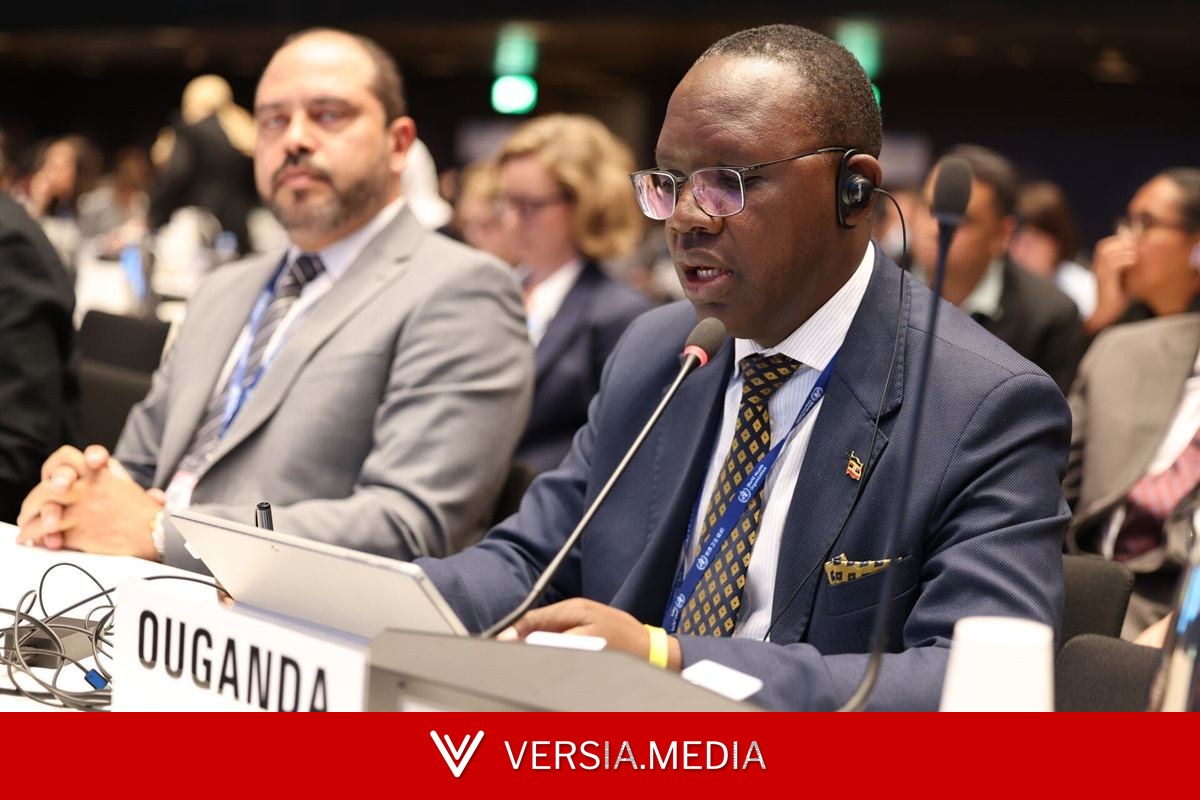
During today's World Health Assembly, Director-General Dr Tedros Adhanom Ghebreyesus delivered his report on WHO's activities to Member States, and the Assembly commenced general discussions centered on the theme "Reshaping global health: a shared responsibility."
The Secretariat presented certificates of achievement recognizing notable public health accomplishments:
Algeria, Australia, Burundi, Egypt, Fiji, Libya, Senegal, and Tunisia for eliminating trachoma;
Chile for eliminating leprosy;
Kenya for eliminating Human African trypanosomiasis;
Suriname and Timor-Leste for eliminating malaria;
Anguilla, Bahamas, Brazil, Cuba, Denmark, Maldives, Montserrat, Oman, Sri Lanka, and Turks and Caicos for eliminating mother-to-child transmission of HIV, HBV, and syphilis; and
Portugal and the United Arab Emirates for eliminating trans-fat.
In acknowledgment of their exceptional contributions to tobacco control, the following World No Tobacco Day award certificates were presented to:
Dr Louise Mapleh-Kpoto, Liberia's Minister of Health;
Dr Monica Garcia Gomez, Spain's Minister of Health;
María Lustemberg Haro, Uruguay's Minister of Public Health; and the
Department of Legislation of Viet Nam.
WHO Member States extend discussions on Pathogen Access and Benefit Sharing system within WHO Pandemic Agreement
The World Health Assembly decided to prolong the drafting and negotiation process of the Pathogen Access and Benefit Sharing (PABS) Annex under the Intergovernmental Working Group (IGWG) on the WHO Pandemic Agreement. The IGWG, as directed by Article 12 of the Agreement, will continue to prioritize this effort.
The objective of the PABS Annex is to establish a framework that ensures a more effective and equitable response to future pandemics. Over the past year, WHO Member States have conducted extensive negotiations on the Annex, and their work's results were presented to the World Health Assembly.
WHO Member States agreed to submit the results of their negotiations on the PABS Annex for review by the Eightieth World Health Assembly in May 2027, or during a dedicated special session of the Assembly in 2026. Adopting the PABS Annex is essential for opening the WHO Pandemic Agreement for signature. WHO Member States will resume negotiations on the PABS Annex after the World Health Assembly at the IGWG's seventh meeting, scheduled for 6–17 July 2026.
Public health emergencies in Committee A
Within Committee A, delegates examined preparedness for and response to public health emergencies, and acknowledged the report on implementing the International Health Regulations (2005) and the report from the Independent Oversight and Advisory Committee for the WHO Health Emergencies Programme.
Delegates also addressed the health consequences of the ongoing conflict in the Middle East, emphasizing the protection of healthcare and health workers in conflict zones, and took note of the report on WHO's activities in health emergencies.
The Committee approved a draft decision concerning the health emergency in Lebanon.
From COVID-19 to action: insights through a decade of the WHO Health Emergencies Programme
On the sidelines of the World Health Assembly, global leaders convened for a strategic roundtable reflecting on lessons from COVID-19 and other crises, coinciding with the tenth anniversary of the WHO Health Emergencies Programme (WHE).
Opening the session, Dr Chikwe Ihekweazu, WHE's Executive Director, noted that WHE's development has been influenced by insights from successive emergencies, particularly COVID-19. WHO Director-General Dr Tedros Adhanom Ghebreyesus characterized the pandemic as the "ultimate stress test," revealing shortcomings in preparedness, equity, and trust, while also spurring innovation and global cooperation. Dr Mike Ryan, former Executive Director of WHE, added historical context, observing that global health systems have frequently evolved reactively following crises such as SARS, Ebola, and COVID-19, and must now adjust proactively to future threats.
Experts highlighted key areas of transformation. Professor Johanna Hanefeld from the Robert Koch Institute emphasized a new phase of epidemic intelligence, where advanced analytics and AI must be combined with robust national systems and public confidence. Dr Daniela Garone of Médecins Sans Frontières stressed the necessity for sustainable and adaptable financing, cautioning that reliance on reactive funding restricts effective preparedness. Dr John-Arne Røttingen from the Wellcome Trust underscored the significance of an end-to-end approach to medical countermeasures, ensuring that scientific advancements lead to equitable access and tangible impact.
Country perspectives illustrated these lessons in practice. Ethiopia's Minister of Health, Dr Mekdes Daba Feyssa, described how COVID-19 prompted major investments in laboratories, oxygen systems, and workforce capacity, bolstering responses to subsequent outbreaks. In the Central African Republic, Minister Dr Pierre Somsé highlighted how integrated strategies such as the Universal Health and Preparedness Review (UHPR) are aligning technical, political, and community efforts to enhance preparedness.
The session conveyed a central message: COVID-19 exposed both the costs of being unprepared and the strength of collective action. While progress has been achieved through the Pandemic Agreement and reforms to the International Health Regulations (IHR), finalizing the Pathogen Access and Benefit Sharing (PABS) annex remains essential. The challenge now is evident—convert lessons into sustained investment and stronger, more equitable systems for the future.