On 17 May 2026, in line with Article 12, paragraph 2, of the International Health Regulations (2005) (IHR)—which addresses the determination of a public health emergency of international concern, including a pandemic emergency—the Director-General (DG) of the World Health Organization (WHO), after consulting with the States Parties where the event was recognized to be occurring, concluded that the Ebola disease outbreak caused by the Bundibugyo virus in the Democratic Republic of the Congo and Uganda qualifies as a public health emergency of international concern (PHEIC), but does not meet the pandemic emergency criteria as outlined in the IHR. The DG's statement issued on 17 May 2026 also included "WHO advice" for States Parties on responding to and preparing for the event.
On 19 May 2026, the DG convened the inaugural meeting of the IHR Emergency Committee concerning the Ebola disease outbreak caused by the Bundibugyo virus in the Democratic Republic of the Congo and Uganda (hereafter "Committee"). The Committee's recommendations aligned with the DG's determination that the event constitutes a PHEIC, but fails to satisfy the pandemic emergency criteria. The Committee recognized that the outbreak is taking place in one of the most challenging operational settings imaginable; thus, any response must integrate key contextual information to enhance the likelihood of a successful outcome. The DG, taking into account the Committee's advice, hereby issues the following temporary recommendations to all States Parties for responding to and preparing for the PHEIC.
====
Temporary recommendations
These temporary recommendations are directed at subsets of States Parties based on the public health risk posed by the Bundibugyo virus disease epidemic they encounter.
All current WHO interim technical guidance can be accessed on this WHO website page. WHO evidence-based guidance has been and will continue to be updated in response to the evolving situation, new scientific evidence, and WHO risk assessments.
States Parties must implement these temporary recommendations with full regard for the dignity, human rights, and fundamental freedoms of individuals, adhering to the principles outlined in Article 3 of the IHR.
For States Parties with documented detection of Bundibugyo virus (the Democratic Republic of the Congo and Uganda)
As of 22 May 2026, the WHO Secretariat assessed the risk for these States Parties as "Very high" for the Democratic Republic of the Congo and "High" for Uganda.
It is noted that the epidemiological situation in the two States Parties differs in terms of outbreak magnitude and the contexts in which response efforts are being carried out.
Specifically, as of 22 May 2026, Uganda has reported two confirmed cases of Bundibugyo virus disease (BVD), both with epidemiological links traceable to areas in the Democratic Republic of the Congo with documented BVD transmission. In Uganda, as of the same date, no onward transmission among contacts of the two confirmed BVD cases has been documented.
The outbreak is caused by the Bundibugyo virus (BDBV), a virus belonging to the Orthoebolavirus genus. Unlike the Ebola virus that causes Ebola virus disease, there are currently no approved therapeutics or vaccines for Bundibugyo virus. While candidate therapeutics are being considered for clinical trials and efforts are underway to fast-track candidate vaccine evaluation, controlling the outbreak depends on scaling up public health interventions as detailed below.
Coordination and high-level engagement
Declare the Bundibugyo virus disease (BVD) outbreak a health emergency, at the national or sub-national level, in accordance with domestic laws and as appropriate.
Activate national disaster or health emergency management mechanisms and activate or establish an emergency operations center, under the authority of the Head of State or relevant government authority, to coordinate response activities across government sectors, administrative levels, and partners to ensure efficient and effective implementation and monitoring of comprehensive BVD control measures. These measures must include enhanced surveillance, including case identification; contact tracing; infection prevention and control (IPC); risk communication and community engagement; laboratory diagnostic testing; case management; and safe and dignified burials. Coordination and response mechanisms should be established at the national level, as well as at the sub-national level in areas where BDBV has been detected and in at-risk areas.
Establish and maintain an up-to-date register of signals consistent with BVD ("alerts"), including the status of their investigation.
Establish and maintain an up-to-date line list of suspected cases—including those identified through syndromic surveillance—probable cases, and confirmed BVD cases.
Establish and maintain an up-to-date list of contacts of all confirmed and probable BVD cases, and monitor each contact for 21 days after the date of last known exposure. The evolution of the outbreak and available resources may require risk-based prioritization of contacts requiring identification and monitoring.
Negotiate, as applicable, and establish security corridors, including cross-border ones, to allow responders to safely reach affected communities, as well as to enable communities to seek appropriate health care.
Notify WHO, through the relevant WHO IHR Contact Point in the WHO Regional Office, of the detection of suspected, probable, and confirmed BVD cases on a daily basis, according to WHO case definitions available here.
Risk communication and community engagement
Implement large-scale trust-building and community engagement interventions—using all trusted available communication channels and working closely with local religious and traditional leaders and traditional healers—so that communities are fully aware of the risks and benefits of control measures and proactively contribute to and support the early detection and early isolation of cases; the identification and monitoring of contacts; and safe and dignified burial practices.
Strengthen community awareness, engagement, and participation to establish and build trust, including by identifying and addressing cultural norms and beliefs that may act as barriers to their full participation in the response; and by integrating interventions and community feedback within the broader response to address the needs of the population, particularly in the context of the protracted humanitarian crisis in the Eastern provinces of the Democratic Republic of the Congo.
Train community leaders on the rationale behind public health measures, including the isolation of cases, monitoring of contacts, and safe burials in a dignified, non-stigmatizing, and non-punitive manner.
Activate local networks, including community health workers, Red Cross volunteers, and other trusted community actors, to promote protective behaviors; facilitate early detection and referral of suspected BVD cases; support contact tracing activities; and collect and relay community feedback to enhance the acceptance of public health measures.
Enable adherence to movement restrictions associated with the application of control measures by providing food, water, communication, financial, and psychosocial support.
Surveillance and laboratory
Strengthen surveillance and laboratory capacity, decentralized across the first sub-national administrative levels (e.g., provinces) with documented BDBV detection, as well as in their neighboring first sub-national administrative levels, through:
Dedicated surveillance and response teams within each health zone and in neighboring health zones determined to be at high risk for the introduction of BVD;
Active case finding and enhanced community surveillance for clusters of unexplained illness or deaths;
The investigation of "alerts" within 24 hours of detection;
The scale-up and strengthening of RT-PCR laboratory capacities for timely testing for BDBV, including the establishment of protocols for safe sample collection, sample referral pathways, and biosafety training for laboratory workers;
Decentralization of laboratory capacities should be considered to allow for quick turnaround times and support patient care, as well as any clinical trials that may take place. Field laboratories should be set up in accordance with biosecurity and biosafety standards. A near-point-of-care assay might be considered, provided its performance is validated against current RT-PCR standards.
NB: The GeneXpert platform cannot detect Bundibugyo virus (BDBV).
Identify and monitor, for 21 days after the date of last known exposure, the health of contacts of suspected, probable, and confirmed BVD cases. On a daily basis, the health status of contacts being monitored should be assessed and recorded. Any contact developing symptoms compatible with BVD should be assessed, isolated, tested, and cared for.
Establish a mechanism to monitor the evolution of indicators related to the performance of contact tracing activities.
Infection prevention and control in health facilities and in the context of care
Strengthen measures to prevent nosocomial infections, including systematic mapping of health facilities, the establishment and dissemination of protocols for triage, targeted IPC interventions, and sustained monitoring and supervision.
Provide continuous IPC training to health care workers, including the proper use of personal protective equipment (PPE).
Provide health facilities with sufficient supplies of appropriate PPE to ensure the safety and protection of their staff, resources for timely payment of their salaries, and, as appropriate, hazard pay.
Establish channels for health workers to report and be assessed following exposures, and have access to psychosocial support and, when possible, post-exposure prophylaxis under compassionate use or clinical trial. All health worker occupational exposures must be investigated to allow for immediate corrective actions.
Consider building community IPC capacity by training community leaders and emphasizing that hand hygiene not only helps bring the BVD outbreak under control but also reduces the risk of transmission of other communicable diseases present in the same areas. Hand hygiene should be facilitated at critical spots, such as schools, churches, bars, markets, local gathering sites, and points of entry.
Patient referral pathway and access to safe and optimized intensive care
Establish dedicated BVD isolation and treatment centers or units for suspected, probable, and confirmed cases, located within or close to areas with documented BDBV detection, with sufficient staff who are specifically trained and equipped to provide optimized intensive supportive care.
Establish protocols for transferring suspected BVD patients safely to dedicated health care facilities for their isolation, assessment, and treatment in a humane and patient-centered approach. This includes trained ambulance teams, mechanisms to notify the receiving health care facility, the application of appropriate IPC precautions during transfer, and decontamination protocols for vehicles and equipment.
Establish protocols for the handling and disposal of medical waste, in accordance with biosafety principles.
Establish survivor follow-up programs, including clinical care, counseling, semen testing and sexual health advice and condoms where appropriate, along with psychosocial support and stigma-reduction programs.
Maintain the package of essential health services, including by providing IPC equipment for them to operate safely. This includes, at a minimum, malaria diagnosis and treatment, and maternal and child health services.
Safe and dignified burials
Establish protocols ensuring funerals and burials are conducted by well-trained personnel, with provision made for the presence of the family and cultural practices, and in accordance with relevant national laws and regulations.
Operations, supplies and logistics
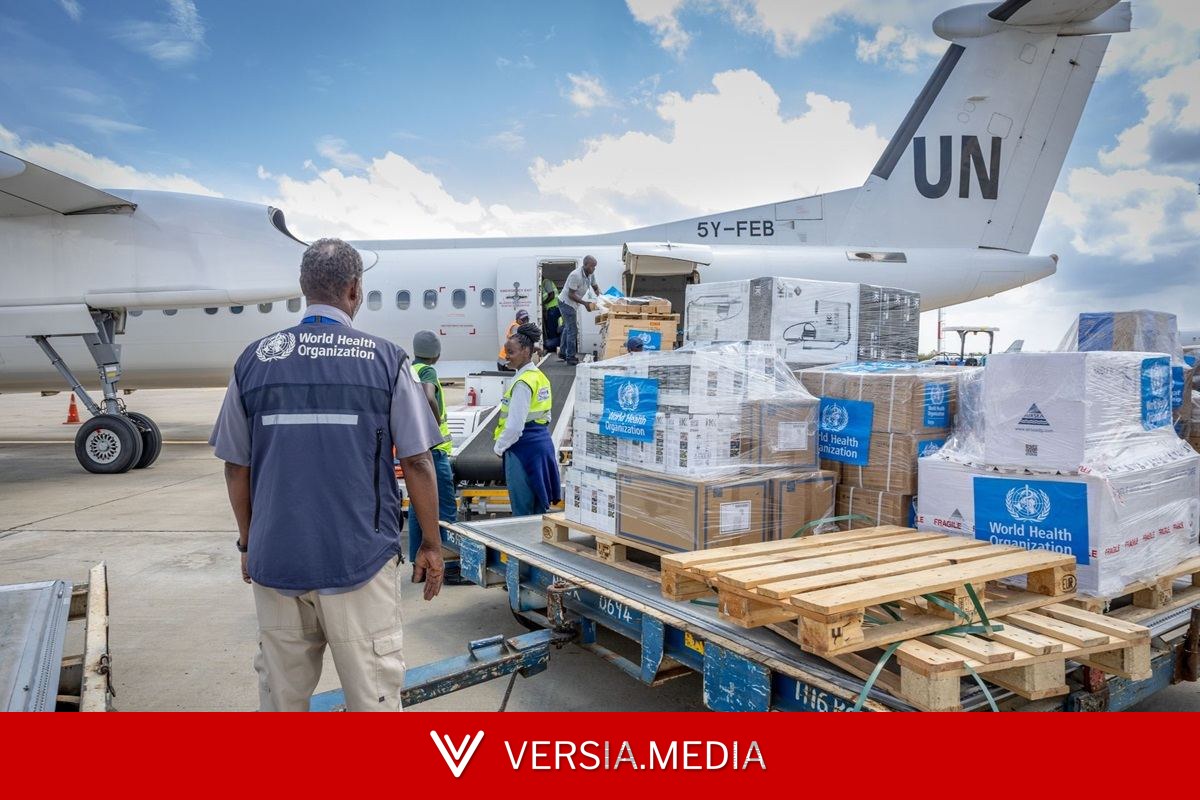
Establish logistics support to maintain a robust supply pipeline for PPE, diagnostics, therapeutics, and other medical commodities, and IPC materials, including for safe burial.
Border health, international travel and mass-gathering events
Enhance, through arrangements between countries sharing borders, surveillance at ground crossings and border areas.
Implement measures, in accordance with national laws and regulations, to prevent suspected, probable, and confirmed BVD cases, as well as their contacts, from undertaking international travel, unless the travel is part of an appropriate medical evacuation.
Prevent the cross-border movement of the human remains of deceased suspected, probable, or confirmed BVD cases, unless authorized through bilateral arrangements.
Implement exit screening at all points of entry—airports, ports, and ground crossings—consisting of, at a minimum, a questionnaire encompassing history of potential exposure to BVD, a temperature measurement, and, in case of fever, an in-depth assessment of the risk of BVD, by personnel trained and equipped with PPE. Any traveler determined to present with an illness consistent with BVD should not be allowed to travel unless the travel is part of an appropriate medical evacuation.
Report to WHO, through the relevant WHO IHR Contact Point in the WHO Regional Office, the implementation of any international traffic-related measure adopted.
Consider postponing mass gatherings until BVD transmission is interrupted.
Research and development of medical countermeasures
Engage, when feasible, with research partners and international institutions to:
Define a robust laboratory strategy and urgently implement head-to-head comparison studies of PCR diagnostics to validate or invalidate the PCR platform (Radione®) currently used in the field.
Implement ethically approved, scientifically robust clinical trials to advance the development and use of candidate therapeutics for treatment and post-exposure prophylaxis and for vaccines.
Establish, with a view to supporting research, expedited and efficient national regulatory and ethics reviews, community engagement, pharmacovigilance (where applicable), data sharing, and equitable access arrangements.
For States Parties with land borders adjoining States Parties with documented BDBV detection
As of 22 May 2026, the WHO Secretariat assessed the regional risk as "High."
Establish a national coordination mechanism articulated with subnational levels.
Rapidly enhance the status of readiness to respond to BVD cases, including establishing active surveillance across health facilities with zero reporting; enhancing community-based surveillance for clusters of unexplained deaths; establishing access to laboratories qualified to test for BVD; raising the awareness of health workers regarding BVD; training health workers on IPC precautions; establishing rapid response teams for the investigation and management of BVD patients and their contacts; and establishing a mechanism for the identification and monitoring of contacts.
Establish the capacity at national reference laboratory(ies) to timely and safely perform testing for BDBV along with relevant differential testing. Consideration may be given to shipment to an international reference laboratory for inter-laboratory comparison as part of external quality assurance implementation.
Conduct international contact tracing operations as necessary, including obtaining information from airlines and other conveyance operations; identifying contacts associated with conveyances on an international voyage; and communicating with States Parties known as the final destination of those contacts.
Intensify risk communication and community engagement activities in communities residing in border areas and at points of entry, including airports and ports with direct connections to States Parties with documented BDBV detection, and provide the general public with accurate and up-to-date information regarding the BVD outbreak and measures to reduce the risk of exposure.
Exercise arrangements in place to respond to BVD through simulation exercises relating to the management of BVD "alerts," including cross-border ones; sample referral; and activation of rapid response teams and mechanisms.
Establish, with a view to supporting research, expedited and efficient national regulatory and ethics reviews, community engagement, pharmacovigilance (where applicable), data sharing, and equitable access arrangements.
Border health and international travel
Provide travelers with accurate and up-to-date information regarding the BVD outbreak and measures to reduce the risk of exposure, including discouraging travel to areas with documented BDBV detection.
Enhance, through arrangements between countries sharing borders, surveillance at ground crossings. This includes establishing coordination mechanisms for the detection and assessment of travelers with unexplained febrile illness; and the timely sharing of information regarding contacts who have, or may have, crossed the border, thus enabling continuity of follow-up.
Pre-position PPE, other IPC materials, sample collection kits, case investigation forms, and safe burial supplies in border areas adjacent to those with documented BDBV detection.
Activate health contingency plans at airports and ports, involving conveyance operators, to detect, assess, and manage travelers from States Parties with documented BDBV detection presenting with symptoms compatible with BVD, and the identification of their contacts, according to established protocols. This entails the availability of trained personnel, referral mechanisms, and the application of IPC measures.
Coordinate with conveyance operators to facilitate timely communication, prior to arrival and to relevant authorities, of any suspected BVD cases on board conveyances, and to identify contacts associated with conveyances on an international voyage. The identification of such contacts entails, where applicable, the communication of personal details to the States Parties known as the final destination of those contacts.
At the time these temporary recommendations are issued, neither the suspension of flights or waterways routes with States Parties with documented BDBV detection, nor denial of entry to travelers and conveyances arriving from those States Parties, are recommended.
Report to WHO, through the relevant WHO IHR Contact Point, the implementation of any international traffic-related measure adopted.
Treat as a health emergency, including through a formal declaration according to domestic laws, the detection of a suspected or confirmed BVD case, of a contact thereof, or of a cluster of unexplained deaths. This includes investigating any of those events within 24 hours and, by instituting case isolation and management; establishing a definitive diagnosis; and undertaking the identification and monitoring of contacts.
Notify WHO immediately, through the relevant WHO IHR Contact Point in the WHO Regional Offices, of any suspected, probable, or confirmed BVD case, as per WHO case definitions available here.
In the presence of a BVD case, temporary recommendations for States Parties with documented BDBV detection apply.
For all other States Parties
As of 22 May 2026, the WHO Secretariat assessed the risk for these States Parties as "Low."
Make arrangements to detect, assess, report, and manage travelers with unexplained febrile illness arriving from areas with documented BDBV detection. These include, but are not limited to, disseminating the definition of BVD cases to public and private health care facilities, including travel clinics, and general practitioners; identifying laboratories to conduct testing for BDBV; and identifying isolation facilities allowing for safe assessment and clinical care.
Provide non-governmental organizations and other entities deploying personnel internationally to respond to the BVD outbreak with information on risk, measures to minimize the risk of exposure, and advice for managing a potential exposure.
Prepare to facilitate the evacuation and repatriation of nationals (e.g., health workers) who have been exposed to BVD cases.
Provide the general public with accurate and up-to-date information regarding the BVD outbreak and measures to reduce the risk of exposure, including discouraging travel to areas with documented BDBV detection.
Border health and international travel
Provide accurate and up-to-date information regarding the BVD outbreak to travel clinics, other health facilities, and professionals, and discourage travel to areas with documented BDBV detection.
Provide incoming travelers, at points of entry, with information about measures to take should they develop symptoms compatible with BVD within 21 days after arrival.
Coordinate with the transport sector, including conveyance and points of entry operators, for the timely management of suspected BVD cases, including communication prior to arrival if the individual is on board; as well as for the identification of their contacts on board conveyance. The identification of such contacts entails, where applicable, the communication of personal details to the States Parties known as the final destination of those contacts.
At the time these temporary recommendations are issued, neither the suspension of flights from States Parties with documented BDBV detection, nor denial of entry to travelers and conveyances arriving from those States Parties, are recommended.
Report to WHO, through the relevant WHO IHR Contact Point, the implementation of any international traffic-related measure adopted.
Notify WHO immediately, through the relevant WHO IHR Contact Point in the WHO Regional Offices, of any suspected, probable, or confirmed BVD case, as per WHO case definitions available here.
In the presence of a BVD case, temporary recommendations for States Parties with documented BDBV detection apply.
All States Parties
Reporting on the implementation of temporary recommendations
Report quarterly to WHO on the status of, and challenges related to, the implementation of these temporary recommendations, using a standardized tool and channels that will be made available by WHO, also allowing for the monitoring of progress and the identification of gaps in the national response.